About Globe Valve
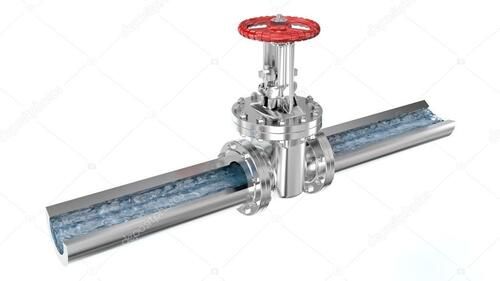
A valve isa device that controls the flow of liquids, gases, or other materials by opening, closing, or partially obstructing a passageway.Valves can be mechanical devices, or they can be natural objects or structures in the heart and veins.Precision in Flow ControlThese globe valves offer reliable and consistent regulation for a wide variety of media including water, steam, oil, gas, and air. With their bolted bonnet construction and metal-to-metal or PTFE sealing, they ensure tight shutoff and durability, meeting stringent industry standards. Their adaptability in pressure and temperature makes them perfect for critical pipeline installations.
Versatile Applications Across IndustriesWhether in chemical processing, water treatment, power generation, or oil & gas sectors, these valves are engineered for high performance. The availability of customizable sizes (DN25-DN450), pressure ratings (PN16-PN40), and surface treatments guarantees a tailored fit for diverse operational needs while maintaining superior safety and longevity.
Built for Reliability and SafetyEach valve is subjected to rigorous testing as per API 598, including body test at 1.5x working pressure and seat test at 1.1x working pressure. With robust tensile and yield strengths depending on material grade, and carefully selected gaskets and coatings, these valves assure long-term leak-free service and minimal maintenance costs.
FAQ's of Globe Valve:
Q: How are Globe Valves with Bolted Bonnet typically used in pipelines?
A: These globe valves are primarily installed to control the flow and regulate pressure within pipelines handling water, steam, oil, gas, or air. They are suitable for both isolating and throttling applications due to their precise seat and disc arrangements.
Q: What advantages does the bolted bonnet offer in these globe valves?
A: A bolted bonnet ensures a secure, leak-proof seal and allows for easier maintenance or gasket replacement. This design gives added durability and safety, especially under high-pressure or fluctuating operating conditions.
Q: When should I choose PTFE gland packing over asbestos?
A: PTFE gland packing is recommended for applications where chemical resistance, lower friction, or non-asbestos materials are required-typically for services involving corrosive media or higher hygiene standards.
Q: Where do these globe valves conform to international standards?
A: These valves comply with major standards like ASME B16.10 for face-to-face dimensions, ASME B16.5 for flanged end connections, and design benchmarks such as BS 1873, IS 14846, and API 623. This ensures compatibility and reliability across global industries.
Q: What is the manufacturing and testing process for these valves?
A: Manufacturing includes precise machining and surface treatment (painted, powder coated, or galvanized), followed by thorough pressure and leakage testing in accordance with API 598. Body and seat tests are conducted at 1.5x and 1.1x working pressure, respectively, to guarantee tight shutoff and integrity.
Q: How does the valve ensure leak-tight performance?
A: The valves feature Class VI leakage performance (tight shutoff) confirmed by seat testing. Various sealing materials, compressed fiber or rubber gaskets, and a unidirectional flow design combine with robust surface finishes to prevent leaks even under demanding conditions.
Q: What are the key benefits of using this type of globe valve?
A: Key benefits include reliable flow control, long service life, easy maintenance due to the renewable disc and bolted bonnet, adaptability to a wide range of media and pressures, and compliance with rigorous quality and safety standards, making them a trusted choice for critical pipeline systems.




 Send Inquiry

 Send Inquiry
 Send Inquiry
 Send SMS
 Call Me Free


 English
 Spanish
 French
 German
 Italian
 Chinese (Simplified)
 Japanese
 Korean
 Arabic
 Portuguese